Peptide Trainings

GLP2

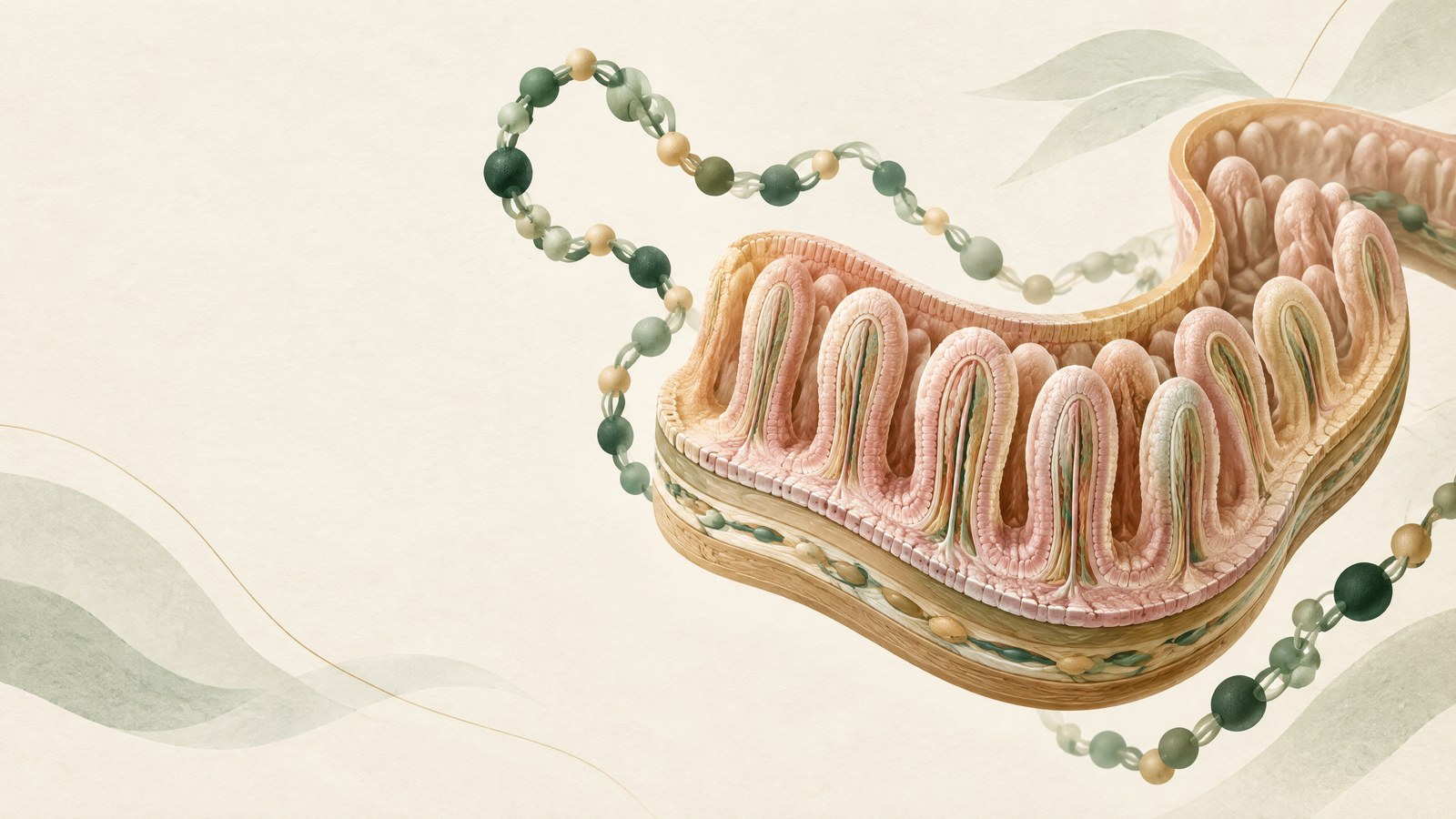
GLP2 native gut-hormone research illustration

Native GLP-2 gut hormone. Explore intestinal lining and absorption research, and how it differs from GLP-1.

GLP2, or native GLP-2, is a 33-amino-acid hormone released by intestinal cells when nutrients arrive. Researchers study its role in intestinal lining, fluid absorption, and nutrient absorption. It is different from GLP-1, tirzepatide, and the prescription GLP-2 analog teduglutide. Its placement in this category does not mean weight-loss benefits are established.

Mechanism of action

Native GLP-2 activates the GLP-2 receptor. Signals between gut cells and nerves can influence intestinal growth, blood flow, absorption, and how easily substances cross the lining. Much of this mechanism evidence comes from animal or laboratory models, not studies proving benefits in healthy people. The enzyme DPP-IV quickly breaks down native GLP-2. A human study measured an intravenous elimination half-life of about 7 minutes, which does not establish a dose, schedule, or product storage life.

Research focus

  • Gut & absorption research
  • Weight-loss benefits not established
  • Intestinal lining and barrier research in animal and laboratory models
  • Fluid absorption research in people with short bowel syndrome
  • Native-hormone breakdown and GLP-2 receptor signaling research

Research status

Limited human research

What the Research Shows

Animal and laboratory models

Studies describe intestinal growth, absorption, blood flow, and barrier changes in specific experimental models. These findings do not prove gut repair or routine wellness benefits in healthy people.

Read the source study or label

Small native GLP-2 human study

In a two-year short bowel syndrome study, 11 patients were offered treatment and 8 completed it. Daily fecal fluid loss, measured as fecal wet weight, fell from about 3 kg to about 2 kg. Energy absorption, body composition, and intestinal mucosal morphology did not change significantly. This small, specific patient study does not establish weight-loss benefits or a product-specific protocol.

Read the source study or label

Teduglutide approval is separate

GATTEX contains teduglutide, a modified GLP-2 analog approved for short bowel syndrome in patients dependent on nutrition or fluid delivered through a vein. That approval and its safety warnings belong to teduglutide, not native GLP-2 or a research product.

Read the source study or label

Short-lived native hormone

Human kinetics research measured an elimination half-life of about 7 minutes for intact native GLP-2 after intravenous administration. This is an in-body measurement, not a preparation guide, storage specification, or dosing schedule.

Read the source study or label

Research Boundaries

For educational and research purposes only. Not medical advice. No product-specific validated human protocol is established here. Small native GLP-2 studies in short bowel patients do not provide a general-use protocol. Teduglutide dosing and preparation instructions do not apply to native GLP-2. Research materials are not for human or veterinary use.
View GLP2 classroom lessons

Side effects and safety

  • Native GLP-2 human safety evidence is limited. Small studies cannot establish reliable adverse-event rates or long-term safety for general use.
  • Intestinal growth and fluid absorption are biological effects, not proof that a research material is safe.
  • The separate analog teduglutide carries warnings about abnormal tissue growth and polyps, intestinal obstruction, biliary or pancreatic disease, and fluid overload. These are teduglutide warnings, not measured native GLP-2 safety rates.
  • Published hormone studies do not establish the identity, quality, or human safety of an unrelated research sample.

Frequently asked questions

What is native GLP-2?

It is a gut hormone released in response to nutrients. Research focuses on intestinal lining and absorption, not established weight-loss benefits.

Is GLP2 the same as a GLP-1 medicine?

No. Native GLP-2 acts on a different receptor. Results from GLP-1 medicines or tirzepatide cannot be applied to it.

What does the small human study show?

Eight short bowel patients completed the study and had lower fecal fluid loss. There were no significant changes in energy absorption, body composition, or intestinal mucosal morphology.

Does teduglutide approval validate native GLP-2 use?

No. Teduglutide is a modified prescription analog with its own indication and warnings. Its approval does not establish native GLP-2 safety or a human-use protocol.

Research references

Read the GLP2 profile

Related peptides

  • Semaglutide

    The breakthrough GLP-1 agonist for sustainable weight loss

  • Tirzepatide

    The dual-receptor agonist that outperformed every GLP-1 drug in clinical trials

  • Triple Regulator "Reta"

    Next-generation triple hormone agonist with the most powerful weight loss data ever recorded in a clinical trial